Flos outdoor lighting transforms how you experience your patio, deck, or garden after dark. Whether you’re looking to extend entertaining hours or simply navigate your yard safely, these Italian-designed fixtures combine aesthetic sophistication with practical illumination. Unlike mass-produced outdoor lights, Flos pieces are engineered for durability while maintaining clean lines that complement modern homes. If you’re ready to upgrade your outdoor lighting beyond basic fixtures, this guide walks you through what makes Flos stand out, which collections suit your space, and how to install and maintain them for years of reliable performance.
Table of Contents
ToggleKey Takeaways
- Flos outdoor lighting combines Italian design sophistication with durable, corrosion-resistant materials engineered for weather resistance and optical performance.
- Popular Flos collections like Skagerak and Outdoor lines offer wall-mounted sconces, bollards, and ceiling fixtures suited for different spaces from modern farmhouses to covered patios.
- Proper placement of fixtures 8-10 feet apart on pathways and surfaces—rather than directly into seating areas—prevents harsh shadows and creates layered ambient, task, and accent lighting.
- Wall sconces and bollards are DIY-friendly installations, while ceiling-mounted fixtures require professional electricians and potential permits to ensure safe wiring and compliance.
- Seasonal maintenance including soft-cloth cleaning, annual seal checks, and quarterly vent clearing protects fixtures from salt spray and mineral deposits for decades of reliable performance.
- Layered lighting strategy combining task (pathways), ambient (patio glow), and accent (architectural highlights) transforms outdoor spaces into genuinely usable areas after dark.
What Makes Flos Outdoor Lighting Stand Out
Design Philosophy and Innovation
Flos brings a distinctly European sensibility to outdoor lighting, minimalist forms, quality materials, and thoughtful engineering. The brand doesn’t chase trends: instead, it creates fixtures that look as fresh in 2026 as they did a decade ago. Most Flos outdoor lights feature corrosion-resistant finishes (typically anodized aluminum or powder-coated steel), rated for harsh weather without sacrificing appearance.
What separates Flos from budget alternatives is the attention to optical performance. Rather than flooding your space with raw lumens, Flos designs distribute light where you actually need it, on a pathway, across a facade, or poolside, reducing glare and wasted illumination. Many models are IP65-rated, meaning they handle jet spray from any angle (important if you’re pressure-washing nearby). Flos also publishes technical specs: lumen output, beam angles, and color temperatures (typically 2700K for warm, residential feel). If you’re accustomed to generic “60-watt equivalent” labels, this level of transparency feels refreshing.
The brand’s Italian heritage shows in proportions and finishes. You won’t find blocky, industrial ugliness or plastic-looking housings. Instead, expect slim profiles, elegant joints, and materials that age gracefully rather than weathering into an eyesore.
Popular Flos Outdoor Collections
Flos offers several outdoor-focused lines, each with distinct applications. The Skagerak series includes wall-mounted and bollard options, known for their clean Scandinavian influence and warm aluminum finishes. These work well on modern farmhouses or minimalist residences.
The Outdoor line (sometimes labeled as part of their architectural range) includes flush-mount ceiling fixtures and directional spotlights, ideal if you need overhead coverage on a covered porch or under an eave. These models often accept GU10 or LED bulbs, making them easier to upgrade as lighting technology evolves.
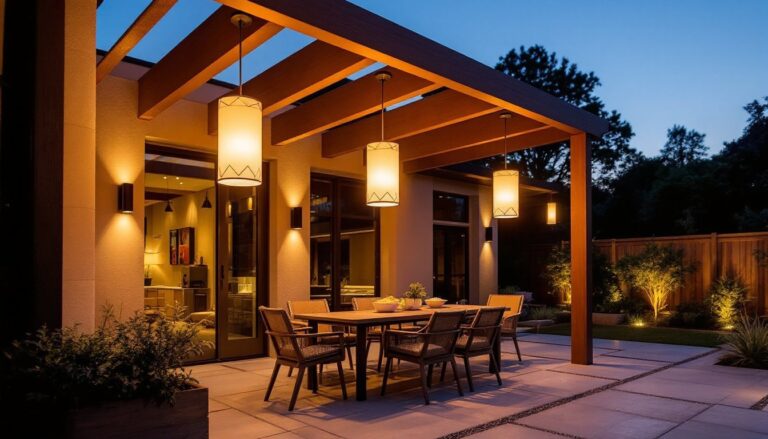
For accent and decorative lighting, Flos offers pendant and chandelier styles that blur the line between indoor elegance and outdoor durability. These suit sheltered spots like covered patios where you want restaurant-like ambiance. One advantage of browsing Flos collections online or at specialty retailers is seeing real installations, how a fixture reads at night, how shadows cast, whether it overwhelms or complements nearby architecture. Design Milk and similar design platforms frequently showcase Flos installations alongside other contemporary fixtures, helping you visualize options in context.
Installation and Placement Tips for Maximum Impact
Installation difficulty depends on the fixture type. Wall sconces and bollards (ground-level posts) are relatively straightforward, you’re fastening to existing studs or drilling into hardscape. Always locate studs with a stud finder before hanging anything over 5 pounds: drywall anchors alone won’t hold a Flos fixture reliably in wind or after vibration from slamming doors. For bollards, you’ll dig a shallow hole, set the base in concrete (typically Quikrete or Sakrete, pre-mixed), and let it cure per manufacturer instructions, usually 24 hours before loading.
Ceiling-mounted fixtures require more planning. You need access to framing (or existing ceiling boxes), proper electrical supply (120V or 12V depending on model), and ideally a permit if you’re adding new circuits. This falls into territory where hiring a licensed electrician makes sense unless you’re experienced with residential wiring. Outdoor Ceiling Lighting: Transform covers overhead options in detail if that’s your direction.
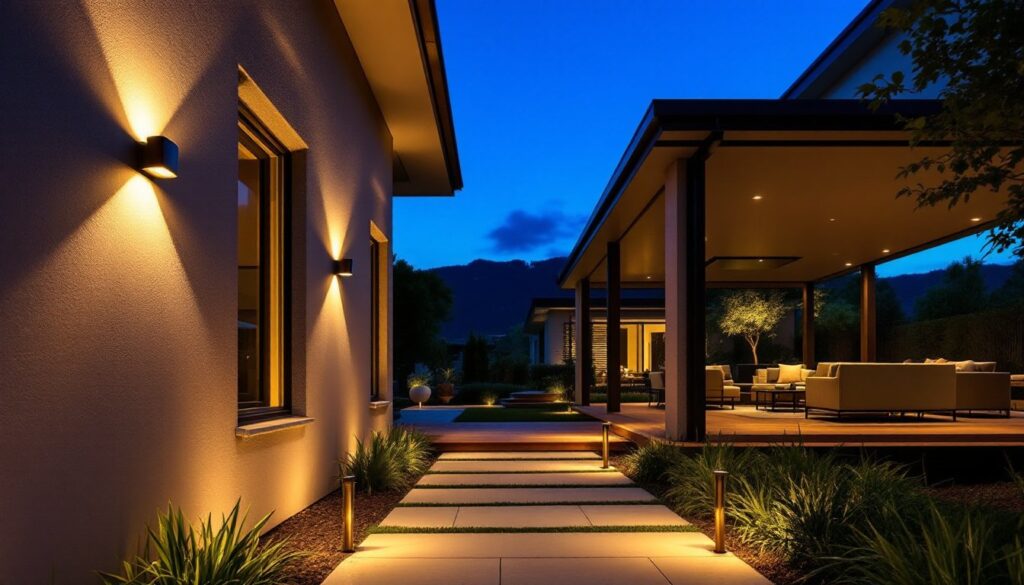
For placement strategy: aim lights at surfaces and pathways, not directly into seating areas. A Flos wall sconce mounted at eye level on the house side of a patio creates ambient glow without harsh shadows. Spacing matters, typically 8-10 feet apart for pathway bollards, so you don’t create pools of light with dark gaps. Test the layout by positioning work lights or flashlights where you’re considering fixtures, then step back and observe from different vantage points. This 15-minute dry run saves regret after installation. Outdoor Wall Lighting explores modern wall-mounted solutions in more depth if vertical mounting appeals to you.
Maintenance and Care for Long-Lasting Performance
Flos outdoor fixtures are built tough, but they’re not maintenance-free. The corrosion-resistant finishes do their job, but salt air, hard water deposits, and debris can accumulate. Clean fixtures annually with a soft brush or cloth and lukewarm water: avoid abrasive scouring pads or harsh chemicals that degrade protective coatings. For stubborn mineral deposits, a diluted white vinegar rinse followed by fresh water works well.
Check seals and gaskets every season, especially if you live in a freeze-thaw climate. Silicone gaskets can harden and crack over years of temperature swings. If water pools inside a fixture’s lens or canopy, that’s a red flag, contact Flos support or a local electrician before using it further. LED bulbs rarely fail, but check connections annually: a loose bulb won’t light even if the power’s flowing.
For ceiling-mounted outdoor fixtures, leaves and debris can block vents designed to allow heat dissipation. Clear these quarterly. If you live near the ocean, plan on more frequent rinses since salt spray accelerates corrosion even on stainless hardware. Outdoor Stair Lighting: Brighten discusses maintenance specifics for step-level fixtures, which share similar care principles.
Creating Your Outdoor Lighting Plan
Before ordering fixtures, sketch your space and identify lighting zones: task (pathways, stairs, work areas), ambient (overall patio glow), and accent (highlighting architectural features or planting). Most residential yards benefit from layered lighting, a ceiling fixture for base illumination, wall sconces for sitting areas, and bollards along walkways.
Take note of existing power sources. Wall sconces ideally tap into nearby interior circuits: ceiling fixtures on covered porches often share existing porch outlets. If you’re planning an uncovered patio without nearby power, you’ll need to run conduit (code requires it in most jurisdictions per NEC standards), which adds cost and may require permits. This isn’t a DIY afternoon, budget professionally.
Choose color temperature purposefully. 2700K (warm white) suits residential spaces and dining areas, creating an inviting feel. 4000K (neutral white) works for task lighting where you need clarity without amber cast. Most Flos fixtures come in 2700K: confirm before ordering. Finally, consider smart controls: several Flos models now accept LUTRON or similar dimmer protocols, letting you adjust ambiance without walking to a switch. This layer of control pays dividends if you’re entertaining or simply want to reduce light pollution late at night. Resources like Hunker and 10 Easy Pieces: Outdoor Wall-Mounted Lights offer real-world installation examples and product pairings that spark planning ideas.
Conclusion
Flos outdoor lighting elevates your yard from an afterthought to a genuinely usable space once the sun sets. By understanding the brand’s design approach, choosing appropriate collections, installing thoughtfully, and maintaining fixtures seasonally, you’ll get decades of dependable performance. Start with one or two key pieces, perhaps a pair of wall sconces, to establish your lighting strategy, then expand as your comfort and budget allow. Quality outdoor lighting isn’t a luxury: it’s an investment in safety and livability that pays back every time you step outside.