Mid-century modern (MCM) design has made a major comeback in outdoor spaces, and MCM outdoor lighting is leading the charge. Those clean lines, geometric shapes, and functional elegance that defined 1950s and ’60s interiors now define patios and yards across North America. Unlike trendy decor that fades fast, MCM outdoor lighting works because it balances form and function, fixtures look striking while doing their job well. Whether you’re refreshing a backyard or building a new outdoor living area from scratch, understanding MCM principles helps you choose fixtures that’ll feel fresh in 2026 and beyond.
Table of Contents
ToggleKey Takeaways
- MCM outdoor lighting combines clean lines, geometric shapes, and honest materials like brushed brass, walnut, and steel to create fixtures that balance striking design with functional performance.
- Choose warm 2700K–3000K LED color temperature for MCM outdoor lighting to match the vintage aesthetic, and ensure all fixtures use consistent warm white tones to avoid visual discord.
- Layer different fixture types—overhead pendants for ambient light, wall sconces for accent lighting, and post lights for pathway guidance—to create depth and define your outdoor space.
- Position pendant lights 12–18 inches below pergola beams and mount wall sconces at 60–66 inches from the ground for optimal illumination and visual balance without harsh shadows.
- Modern MCM outdoor lighting uses weather-resistant materials like powder-coated aluminum, stainless steel, and UV-resistant acrylics to withstand the elements while maintaining mid-century style for decades.
- Always verify local electrical codes, obtain required permits for new circuits, and hire a licensed electrician for wiring work to ensure safety and compliance with GFCI protection standards.
What Defines Mid-Century Modern Outdoor Lighting
Mid-century modern lighting shares a few core traits: minimal ornamentation, honest materials, and purposeful design. Think walnut wood, brushed brass, and steel paired with simple glass or acrylic shades. MCM fixtures reject fussy decoration: instead, they highlight the shape of the fixture itself and let form follow function.
In outdoor settings, MCM lighting emphasizes geometric silhouettes. A slatted wood pendant, for example, uses horizontal or vertical slats to create shadow patterns while casting light downward. Starburst fixtures with radiating arms draw inspiration from atomic-age design but keep proportions human-scale. Tapered legs, angled shade mounts, and material contrast (wood against metal, for instance) are hallmarks.
Color palettes lean toward warm neutrals: blacks, browns, whites, and metallic finishes like brushed brass or oil-rubbed bronze. Warm 2700K–3000K LED color temperature mimics vintage tungsten bulbs and suits the MCM aesthetic far better than cool, clinical 5000K whites. When selecting MCM outdoor lighting, check the correlated color temperature (CCT) on the product spec sheet to ensure it matches that warm, inviting glow.
One key difference from vintage MCM: modern fixtures use weather-resistant materials and LED technology. You’re not finding original 1960s pendant lights standing up to rain and salt air for decades. Today’s MCM reproductions and inspired designs use powder-coated aluminum, stainless steel hardware, and UV-resistant acrylics, materials that survive the elements while keeping that vintage spirit.
Essential MCM Outdoor Lighting Styles and Fixtures
Pendant Lights and Hanging Fixtures
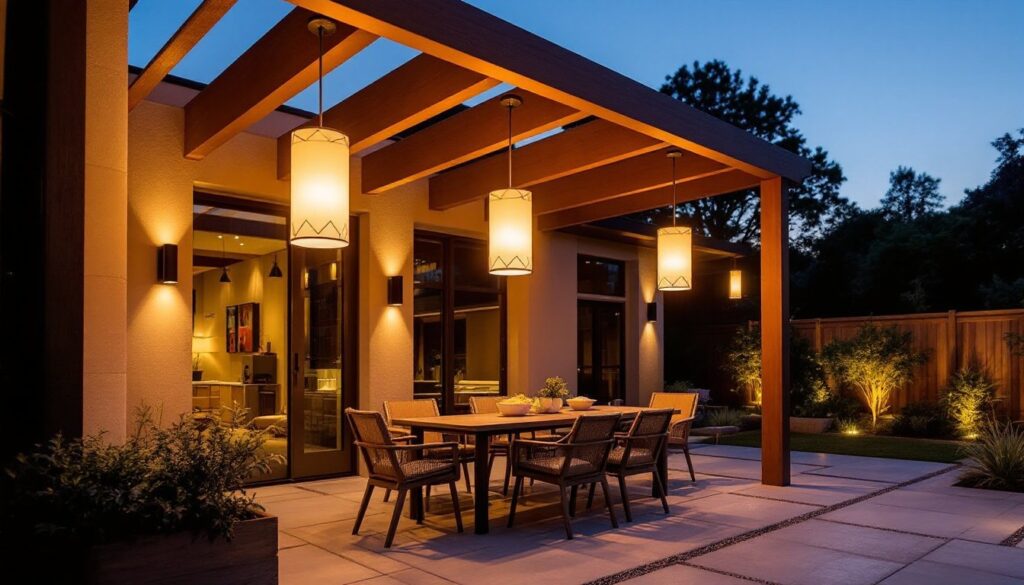
Pendant lights hung from a patio or pergola ceiling are the workhorse of MCM outdoor lighting. Classic designs feature tapered or cylindrical shades in fiberglass, molded plastic, or frosted acrylic, materials that diffuse light evenly and age gracefully. A well-chosen pendant casts light down onto seating or dining areas without blinding you when you look up.
Popular MCM pendant styles include bubble lights (rounded, translucent shades), geometric cones (often in white or earth tones), and slatted wood designs that play with shadow and light. Most outdoor pendants use medium-base (E26) sockets and accept standard LED A19 or PAR38 bulbs, though some require specific wattage limits, always check the label. For a patio with a 10-foot ceiling, a 14- to 18-inch diameter shade scales well without overwhelming the space or hanging so low it blocks sightlines.
When installing pendant fixtures, consider spacing and quantity. Over a dining table, one pendant centered works for intimate areas: larger patios benefit from two or three spaced 4 to 6 feet apart for balanced illumination. Pendants need weathertight junction boxes (rated wet location or damp location depending on exposure) and outdoor-rated wiring. If you’re replacing an existing fixture, the rough-in electrical may already be in place: if you’re adding new pendants, running wire through a pergola or to a new junction box is a job for a licensed electrician in most jurisdictions.
Hanging lanterns with MCM flair often feature brass or copper frames with geometric etch patterns on the glass. These suit entry areas and covered patios where they won’t take direct rain. Pair them with dimmable LED bulbs to set mood for evening gatherings, modern smart home technology now allows remote dimming and scheduling, a comfort those 1950s designers never imagined.
Wall Sconces and Post Lights
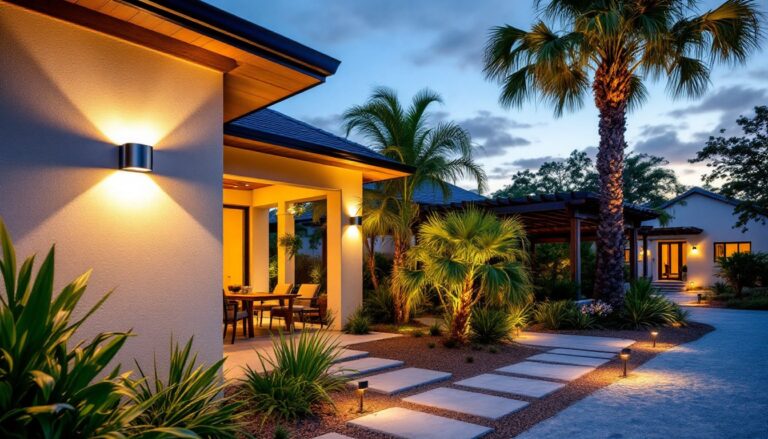
Wall-mounted sconces define the MCM outdoor aesthetic and serve both functional and decorative roles. Mid-century designs typically feature a single-arm or bracket-style mount with a geometric shade, think tapered drums, hexagons, or rectangular boxes in matte finishes. Sconces mounted on the house exterior, a fence, or a pergola beam at eye level (roughly 60–66 inches from the ground) provide accent lighting and wayfininding without harsh shadows.
Post lights (also called bollards or column lights) crown vertical posts at 3 to 4 feet in height and suit MCM landscapes well. Look for models with simple, tapering silhouettes and frosted or opal acrylic diffusers. Unlike their landscape counterparts, which are squat and low, MCM-inspired post lights have presence and elegance. Position them along walkways or at patio edges to frame space and improve safety, code typically requires that pathways and transitions remain illuminated to at least 0.2 foot-candles of light.
Both sconces and post lights are simpler to install than pendants because they mount to existing structure (wall studs or deck posts) and typically run on low-voltage 12V or 24V systems or standard 120V outdoor circuits. Low-voltage systems use a transformer to step down power, making them safer around damp areas and easier to run wire through tight spaces. If your patio doesn’t have existing outdoor circuits, installing 120V sconces requires running a new GFCI-protected circuit from your breaker panel, again, a licensed electrician’s domain in most areas.
When choosing finishes, match metals to existing hardware on your home. If your door handles and gutter trim are oil-rubbed bronze, MCM sconces in that finish tie the composition together. Brushed brass and stainless steel work in modern MCM designs: pure chrome or shiny nickel reads more contemporary and less authentically mid-century.
How to Integrate MCM Lighting Into Your Outdoor Space
Start by mapping your patio zones and lighting needs. Functional areas, dining tables, grilling zones, entryways, need task lighting at sufficient brightness (typically 50–75 lux for dining, higher for food prep). Seating and lounge areas benefit from softer accent lighting around 10–20 lux. MCM-style fixtures can handle both roles: the key is fixture placement and lumen output.
When layering MCM lighting, combine fixture types for depth. Overhead pendants provide ambient light, wall sconces add visual interest and accent walls or pathways, and lower-level post lights guide foot traffic while reinforcing the geometry of your outdoor “room.” If your patio has a pergola or shade structure, mount pendants 12–18 inches below the bottom beam so light spreads evenly without creating hot spots directly overhead.
Material coordination matters. If you choose wood-and-brass pendant fixtures, echo that pairing in a wooden pergola with brushed brass mounting hardware, or in sconces on wooden fence posts. Outdoor wall lighting modern designs show how a cohesive material palette strengthens visual impact. Similarly, geometric shade forms in your pendants can echo the lines of your deck railing, pergola pattern, or planters.
Color temperature consistency keeps the space feeling intentional. All fixtures should use the same CCT, stick to warm white (2700K) throughout. Mixing warm and cool tones creates visual discord and makes a small patio feel fragmented. Look for fixtures rated IP65 or higher for weather resistance: this rating ensures water and dust protection. Pendant and sconce shades should be tempered glass or UV-resistant acrylic to avoid yellowing over time.
Lighting control adds flexibility. Installing sconces and pendants on separate switches (or separate smart bulbs) lets you adjust ambiance for dinner versus a casual hangout. Some homeowners add dimmers to pendant circuits for smooth intensity control: this requires dimmer-compatible LED bulbs and a dimmer-rated switch, standard toggle switches fail with many LED types. Modern design inspiration from contemporary sources shows how lighting control has become central to outdoor entertaining.
Final consideration: permitting. Structural changes (adding outlets, running new circuits) almost always require permits and inspections. Replacing an existing fixture with one of similar wattage typically doesn’t, but check your local building department’s rules. Coastal areas and regions with snow load concerns may have additional wind or dead-load requirements for hanging fixtures, so verify that outdoor ceiling lighting and pendant installations meet local IRC (International Residential Code) standards for your zone.
Electrical safety is non-negotiable. Outdoor circuits must be protected by GFCI (ground-fault circuit interrupter) breakers or outlets. Any work above shoulder height or involving power tools, drilling roof mount holes, for instance, calls for safety glasses and stable ladder work. If you’re not confident wiring fixtures or running new circuits, hire a licensed electrician. MCM outdoor lighting looks great only when it’s safe and built to code.
Conclusion
MCM outdoor lighting brings timeless design and reliable function to modern patios. By choosing fixtures that honor clean lines and warm materials, you’re investing in a style that doesn’t feel dated or fussy, it deepens in character over time. Layer pendants, sconces, and post lights thoughtfully, match finishes to your home’s hardware, and keep color temperature consistent across the space. Respect electrical codes, prioritize safety, and don’t hesitate to call a professional for wiring work. Your outdoor space will reward the effort with years of beautiful, functional illumination.