Florida’s intense sun, humidity, and salt air create a unique challenge for outdoor lighting, standard fixtures won’t cut it for long. Whether you’re securing your entryway after dark, creating an inviting patio, or highlighting landscaping, outdoor lighting in Florida demands materials and planning that account for the state’s specific climate. This guide walks you through the best practices, fixture types, and installation strategies that keep your outdoor spaces bright, safe, and beautiful all year.
Table of Contents
ToggleKey Takeaways
- Outdoor lighting in Florida requires weather-resistant materials like 316 marine-grade stainless steel, IP65-rated fixtures, and polycarbonate lens covers to withstand humidity, salt air, and intense UV exposure.
- LED fixtures are essential for Florida’s climate because they consume 75% less energy than incandescent, last 25,000–50,000 hours, and handle moisture better than halogen alternatives.
- Layer your outdoor lighting into functional zones—ambient for mood, task lighting for dining and grills, accent lighting for features, and motion-activated security lights for entry points and perimeters.
- Use warm color temperature LEDs (2700K–3000K) across all outdoor lighting zones to reduce skyglow, attract fewer insects, and maintain a residential feel in Florida’s already bright environment.
- Proper installation and maintenance are critical: use outdoor-rated wiring buried 12 inches deep, caulk all wire entry points with marine-grade silicone, rinse fixtures monthly with fresh water, and obtain permits before permanent electrical work.
Why Florida Homes Need Strategic Outdoor Lighting
Florida’s landscape presents distinct lighting demands. The state’s high humidity, salt spray near coastal areas, intense UV exposure, and sudden afternoon thunderstorms all wear down fixtures faster than in milder climates. Beyond durability, outdoor lighting in Florida solves practical problems: the sun sets early in winter (around 5:30 p.m. in December), leaving your exterior spaces dark during dinner hours. Extended darkness also creates security blind spots around entry points, driveways, and pool areas.
Strategic outdoor lighting does more than prevent stumbling. It deters break-ins, defines your property’s boundaries, highlights architectural features, and extends usable outdoor time into the evening. In Florida’s subtropical climate, outdoor entertaining often happens after sunset when it’s cooler. Well-planned lighting transforms a dark yard into a functional, welcoming extension of your home. It’s an investment in both safety and lifestyle.
Best Outdoor Lighting Options For Florida’s Climate
Weather-Resistant Materials and Finishes
Start with fixtures rated IP65 or higher, this ingress protection rating means the fixture resists water jets and dust. Look for materials that handle salt air and UV: 316 marine-grade stainless steel is the gold standard for coastal homes, though it costs more than standard aluminum. Powder-coated aluminum is a solid, budget-friendly middle ground if you’re inland. Avoid bare cast iron and untreated wood: they corrode and deteriorate quickly in Florida’s climate.
Polycarbonate or tempered glass lens covers outperform acrylic, they resist yellowing from UV and won’t cloud over in humidity. Check gaskets and sealants: silicone holds up better than rubber in heat and salt. Finishes matter too: matte or textured coatings hide water spots better than glossy ones, reducing maintenance effort.
LED fixtures are nearly non-negotiable in Florida. They produce minimal heat, handle humidity better than incandescent or halogen, and last 25,000 to 50,000 hours, crucial in a state where air conditioning runs constantly and moisture infiltrates less-sealed spaces. Halogen and incandescent fixtures draw more power, generate heat that attracts insects, and fail faster in damp conditions.
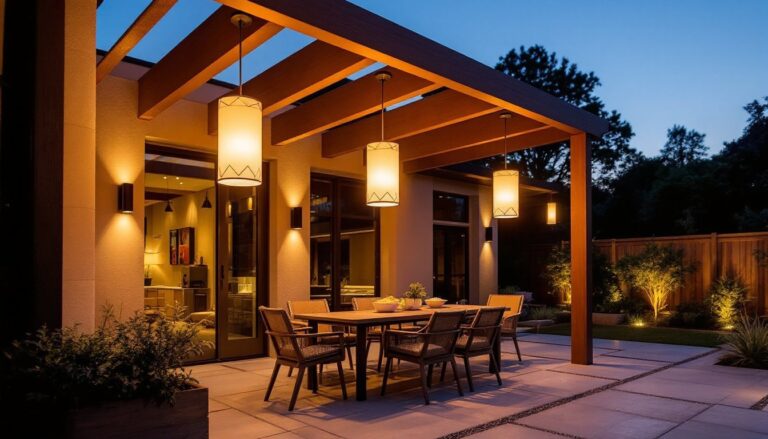
When choosing fixture styles, consider how salt air and rain will access crevices. Recessed lights in soffits trap moisture: wall-mounted sconces with overhangs shed water more effectively. Pendant lights hanging from pergolas work well if they’re sealed at the attachment point. A light that’s simple to clean, without ornate details that collect debris, wins in Florida’s sticky, humid environment.
Lighting Zones To Enhance Your Outdoor Space
Divide your outdoor area into functional lighting zones. Ambient lighting sets the overall mood, string lights, soft sconces, or uplighting on trees create a welcoming atmosphere. Plan for at least 2-3 foot-candles in entertainment areas: too dim and guests stumble, too bright and it feels like a parking lot.
Task lighting illuminates specific work areas: patio dining tables, grills, and reading nooks need 5-10 foot-candles to see clearly. Mount these fixtures 6-8 feet high so they light the surface without creating harsh shadows on faces.
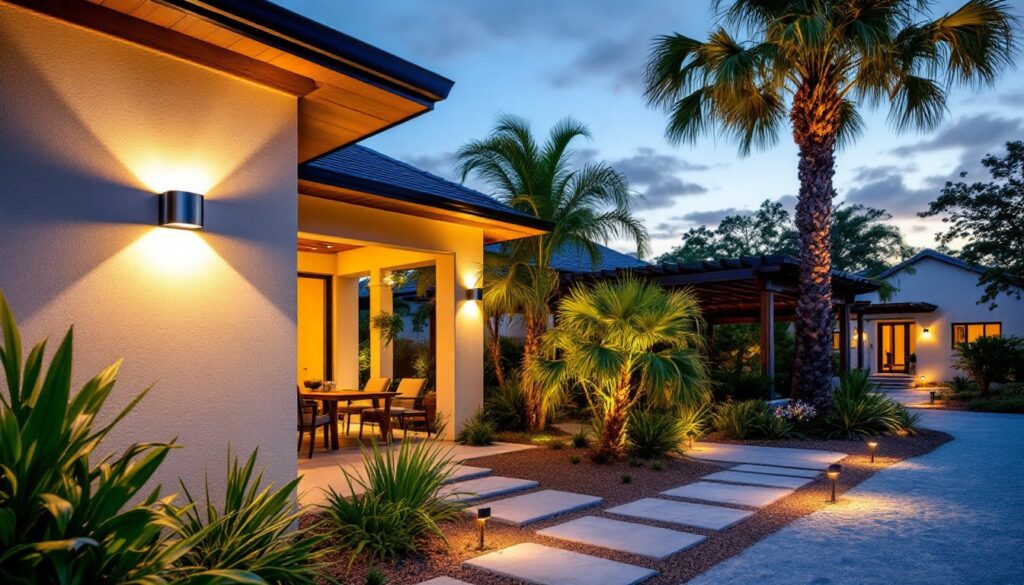
Accent lighting highlights architectural or landscape features, uplighting a feature wall, downlighting palms, or backlighting a fountain adds depth and visual interest. Use warmer color temperatures (2700K to 3000K) for residential spaces: cooler 4000K or 5000K lights feel institutional and draw more insects.
Security lighting focuses on entry doors, garage access points, and property perimeters. Motion-activated fixtures cut energy waste when no one’s outside: position them 8-10 feet high to detect movement across a wider area. Florida’s flat terrain means you can’t rely on natural elevation changes, you’ll need lights placed strategically to eliminate dark corners.
Resources like Gardenista offer landscape-focused inspiration for combining lighting with plantings. When layering zones, avoid overlapping glare from multiple fixtures, and use warm tones to balance Florida’s already bright daytime environment.
Energy-Efficient Solutions For Year-Round Use
Florida’s year-round outdoor lighting use means energy bills add up fast. LED fixtures consume 75% less energy than incandescent, and because they’re on more often in Florida than in colder states, the savings compound. A single 9-watt LED sconce (equivalent to a 60-watt incandescent) costs roughly $1–2 per month to run 24/7, multiply that across a 10-fixture installation and the difference becomes significant.
Solar lighting seems attractive, but Florida’s afternoon thunderstorms and humidity reduce charging efficiency compared to sunnier regions. If you choose solar, pick fixtures with Li-ion batteries and at least 2000 mAh capacity: cheaper solar-powered lights fail within a season. Hybrid systems (solar during the day, grid-powered backup) are more reliable but require wiring.
Timer controls and smart motion sensors prevent lights running all night on empty patios. Dusk-to-dawn photocells automatically turn lights on at sunset and off at sunrise, practical for Florida’s consistent daylight hours year-round. Zoned circuits let you control ambient and security lighting separately: you might dim entertaining lights at midnight while keeping entry lights full brightness.
Consider warm-color LED fixtures (2700K) across all zones, they consume the same power as cool whites but reduce skyglow, attract fewer insects, and feel more residential. Installation of a dedicated 20-amp circuit for outdoor lighting (separate from indoor systems) prevents overload and ensures your landscape lights work independently of household usage.
Resources like The Spruce provide detailed guides on wiring decisions and code compliance. In Florida, most new outdoor electrical work requires a permit and inspection: check with your local building department before installing permanent fixtures.
Installation Tips and Maintenance For Florida Living
Wiring and voltage: Use 12 or 10-gauge copper wire rated for outdoor use (UF or underground feed cable). Bury it 12 inches deep or run it through conduit above ground: Florida’s sandy soil doesn’t protect from erosion or accidental digging. Low-voltage systems (12V) are safer for shallow borders and deck lighting but require a transformer near your main panel.
Mounting and spacing: Mount sconces and wall lights 5.5–6.5 feet from the ground, high enough to avoid accidental contact but low enough for maintenance without a ladder. Space path lights 8–10 feet apart along walkways: closer spacing looks cluttered, wider spacing leaves dark gaps. Use stainless steel fasteners and brackets even if your fixture is aluminum: galvanized steel will corrode and stain the finish.
Weatherproofing prep: Caulk all entry points where wires pass through walls or fixtures using marine-grade silicone. Gaps invite moisture and insects, Florida’s humidity finds every opening. If you’re retrofitting existing fixtures, seal around the base with silicone before tightening mounting bolts. Don’t over-tighten: it cracks lens covers and seals.
Maintenance rhythm: Rinse fixtures monthly with fresh water to remove salt spray and dust: a garden hose works fine. For coastal properties, wipe seals and gaskets quarterly and inspect for corrosion. Clean lens covers with a soft cloth and mild soap, abrasive cleaners scratch polycarbonate. Replace any corroded fasteners immediately: rust spreads quickly in salt air.
Permits and codes: Most permanent outdoor electrical work requires a permit and inspection. Florida follows the National Electrical Code (NEC) and the Florida Building Code: requirements vary by county. Buried conduit, circuit protection, and GFCI outlet placement all have specific rules. Hire a licensed electrician if you’re uncertain: the cost of permits and inspection (typically $100–300) beats the liability of unpermitted wiring.
References like Country Living showcase well-designed outdoor spaces that balance aesthetics with durability, a reminder that good design starts with solid installation.
Alternatives to DIY installation: If running wire or mounting fixtures feels beyond your comfort level, hire a licensed electrician. It’s not expensive for simple layouts, $300–800 for a basic installation, and eliminates code violations and safety risks. For renters or temporary setups, battery-powered LED lights and solar options (even though efficiency drawbacks) avoid permanent wiring entirely.
Conclusion
Outdoor lighting in Florida isn’t one-size-fits-all: it’s a systems approach. Choose weather-resistant materials, plan functional lighting zones, invest in energy-efficient LEDs, and follow electrical codes during installation. Your reward is a safe, beautiful outdoor space that works year-round even though humidity, salt air, and intense sun. Start with one zone, a patio or entryway, and expand as you settle into the maintenance rhythm. Florida’s outdoor season never really ends: make sure your lighting keeps pace.