When the sun dips below the horizon, your outdoor space shouldn’t vanish into darkness. Strategic Carolina outdoor lighting transforms your backyard, patio, or deck into a functional, inviting extension of your home, whether you’re hosting a summer gathering or simply enjoying an evening on your porch. Unlike generic lighting plans, Carolina homes benefit from designs that account for the region’s climate, landscape features, and architectural styles. This guide walks you through choosing the right fixtures, understanding energy efficiency, and tackling installation yourself when the scope fits a confident DIYer.
Table of Contents
ToggleKey Takeaways
- Carolina outdoor lighting designs must account for the region’s climate, humidity, and architectural styles to ensure durability and curb appeal for your backyard or patio.
- LED fixtures consume 80–85% less energy than incandescent alternatives and last 25,000–50,000 hours, saving Carolina homeowners $50–150 annually on typical outdoor setups.
- Hardwired electrical work requires a licensed electrician and permit in North Carolina and South Carolina, while low-voltage 12V systems are often DIY-friendly and safer to install.
- Layer your outdoor lighting with ambient, task, and accent lights—positioning fixtures 8–12 feet apart and aiming high to avoid glare and create depth in your space.
- Carolina’s high humidity demands biannual fixture cleaning and annual weatherproofing checks to prevent corrosion and maintain light output in your outdoor living area.
- Modern smart outdoor lighting offers scheduling and dimming control but costs 30–50% more, making it best suited for homeowners who prioritize convenience and security.
Why Outdoor Lighting Matters for Your Carolina Home
Outdoor lighting serves a dual purpose: safety and aesthetics. Well-placed lights mark stairs, pathways, and deck edges, reducing trip hazards and making movement safe after dark. Beyond safety, outdoor lighting extends usable living space into evening hours. A properly lit patio becomes an outdoor room: uplighting on trees creates visual depth and frames your landscaping.
Carolina homeowners face specific challenges: intense summer sun, afternoon thunderstorms, and high humidity affect fixture durability and placement strategies. Corrosion-resistant finishes and proper drainage become practical necessities, not luxuries. Also, many Carolina neighborhoods have covenants or architectural guidelines affecting fixture styles. Understanding these constraints upfront saves regret and costly replacements.
Choosing the Right Lighting Style for Your Landscape
Your outdoor lighting style should complement your home’s architecture and landscape character. Carolina properties range from beach cottages to Colonial revivals to modern farmhouses, each calling for a different approach.
Modern and Contemporary Options
Modern outdoor fixtures emphasize clean lines, minimalist forms, and often feature stainless steel, brushed aluminum, or matte black finishes. These work beautifully on contemporary homes or as an intentional contrast on traditional properties. Linear path lights set flush into decking, geometric wall sconces, and sculptural post caps suit this aesthetic. Contemporary styling pairs well with warm white (2700K–3000K) or neutral white (4000K) LED bulbs. Look for fixtures rated IP65 or higher, that “Ingress Protection” rating ensures water and dust resistance critical for Carolina’s humidity and salt-air exposure near coastal areas.
Traditional and Southern-Inspired Designs
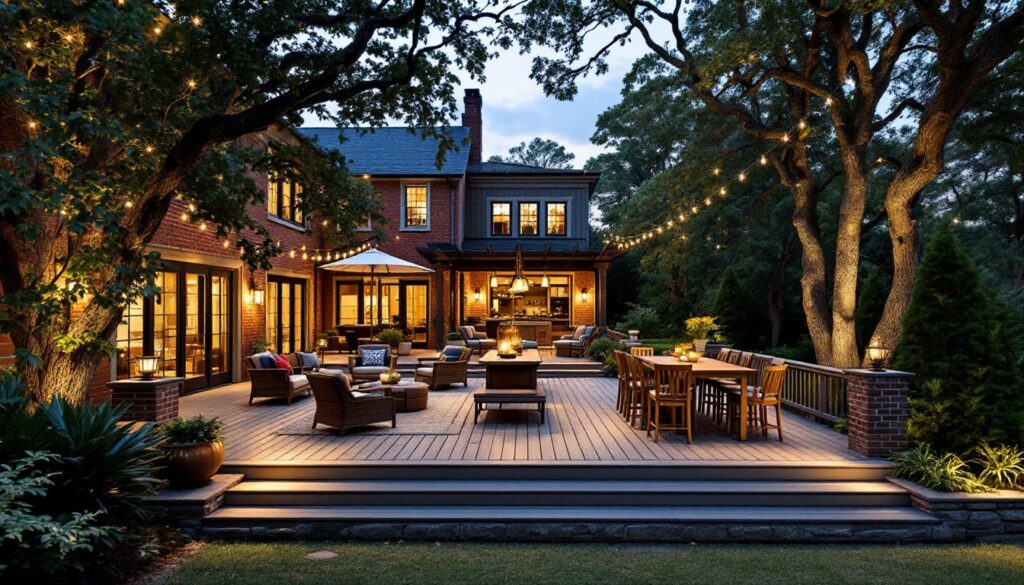
Southern-inspired outdoor lighting often draws from colonial and plantation architecture: lantern-style fixtures, coach lights with warm amber tones, and brass or oil-rubbed bronze finishes. Pedestal lamps, hanging lanterns, and wall sconces with traditional proportions suit brick homes, porches, and formal entries. Many Carolina homeowners pair these with string lights for intimate patio settings, a nod to Southern gathering tradition. Outdoor wall lighting modern designs offer hybrid options that blend period charm with contemporary durability.
Energy-Efficient Outdoor Lighting Solutions
LED technology has matured dramatically. A modern LED outdoor fixture consumes 80–85% less energy than incandescent equivalents and lasts 25,000–50,000 hours (roughly 10–20 years of typical use). For a typical 3-fixture patio setup, LED conversion saves $50–150 annually depending on run time and local electricity rates.
Smart outdoor lighting, fixtures with integrated WiFi or Bluetooth, adds convenience and control. You can dim lights, adjust color temperature, or set schedules from your phone. Many Carolina homeowners value this for security (automated lights deter trespassers) and lifestyle (softer evening tones support relaxation). But, smart fixtures cost 30–50% more than standard LED equivalents. Weigh the premium against your actual usage patterns.
Solar-powered lights eliminate wiring and electricity altogether, ideal for accent lighting, path marking, or garden features far from outlets. Modern solar LEDs perform reasonably well even in Carolina’s humid climate, though they’re less bright than line-voltage fixtures and perform poorly on heavily shaded sites. Treat solar units as supplemental, not primary, lighting for functional areas.
Recent reviews of smart outdoor lights for 2024 highlight top performers in waterproofing and color consistency. Compare options based on lumen output (brightness), color temperature (warm vs. cool white), and dimming capabilities.
DIY Outdoor Lighting Installation and Placement Tips
Many Carolina homeowners can tackle fixture installation, but scope matters. Hardwired (line-voltage) outdoor lighting requires a permit and a licensed electrician in most North Carolina and South Carolina jurisdictions. Do not skip this. Short cuts on electrical work invite fire and shock hazards. Low-voltage systems (12V) running on a transformer are often DIY-friendly, check your local code, and far safer to troubleshoot yourself.
For hardwired installations, plan the circuit layout carefully. Most outdoor circuits run 20 amps and can typically handle 8–10 standard fixtures before you need a dedicated circuit. Position the transformer or breaker in a dry, accessible location. Run conduit (rigid plastic or PVC) underground at least 6 inches deep, or use armored cable (thhn/thwn) rated for wet locations. Verify code requirements with your local building department before digging or cutting into walls.
Placement strategy beats raw wattage. A single fixture poorly sited wastes energy and creates glare. Instead:
• Layer your lighting. Combine ambient (general patio brightness), task (deck steps, grill area), and accent (uplighting trees, wall washers) lights.
• Aim high and angle down. Uplighting on tall elements (trees, pergolas, soffits) casts shadows naturally and avoids direct glare in seated eye level.
• Space fixtures 8–12 feet apart for even path or deck illumination, depending on lumen output.
• Test before hardwiring. Use a temporary battery-powered light or extension cord to simulate placement and brightness before committing to conduit runs.
Outdoor ceiling lighting and well-positioned wall fixtures reduce glare compared to ground-level or overhead floodlights. For stairs and ramps, step lights recessed into treads or mounted on adjacent walls meet safety codes while looking refined.
Enhancing Your Outdoor Living Areas With Strategic Lighting
Think of outdoor lighting as framing and furniture arrangement. Over-lighting flattens a space: thoughtful placement sculpts it.
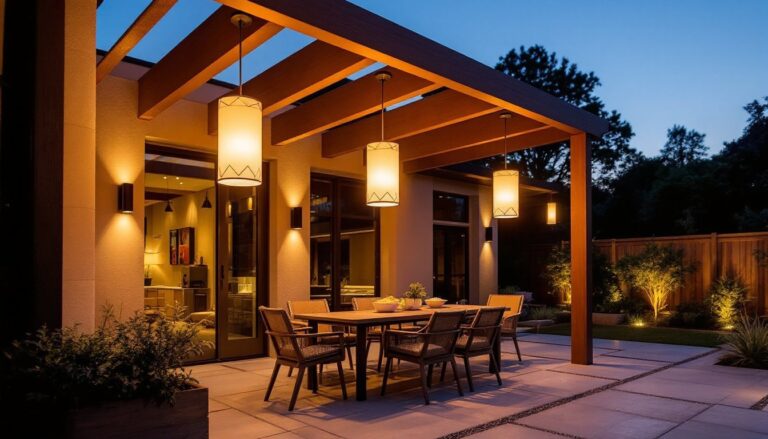
Patios and Decks: Focus ambient light on seating and dining zones. Pendant fixtures suspended 7–9 feet above a table provide task lighting without harsh shadows. Add softer accent lights, string lights, sconces, or post lamps, around perimeter edges to define the space and enhance ambiance without overwhelming brightness.
Pathways and Transitions: Continuous illumination from entry to seating areas guides movement safely. Outdoor stair lighting is non-negotiable: recessed step lights or low-profile rail lights ensure safe footing and are far more elegant than a single bright floodlight.
Landscaping and Focal Points: Uplighting on mature trees, specimen shrubs, or architectural features adds depth and drama. Silhouette lighting (placing a light behind an object toward the viewer) creates striking silhouettes. Moonlighting (angled lights high overhead simulating moonlight through tree canopy) feels natural and is easier on the eyes than direct floodlighting.
Humidity and Maintenance: Carolina’s moisture demands regular care. Clean fixtures twice yearly to remove pollen, salt spray, and debris that reduces light output and accelerates corrosion. Use a soft brush and mild soap: avoid abrasive cleaners on polycarbonate lenses. Check wire connections and weatherproof seals annually.
Consult 30 beautiful outdoor lighting ideas for backyards and patios and outdoor string light options for regional inspiration tailored to Southern aesthetic preferences.