Good dining room lighting does more than illuminate a table, it shapes the mood of every meal, conversation, and gathering. Whether you’re hosting a formal dinner or casual weeknight pasta, the right fixtures transform the space from purely functional to genuinely inviting. The challenge isn’t finding any light: it’s choosing dining room lighting ideas that work for your room’s proportions, your design aesthetic, and the actual way you use the space. This guide walks through seven proven approaches, from classic chandeliers to modern pendant setups, plus the practical details about dimming, placement, and installation so you can make informed decisions before you flip the switch.
Table of Contents
ToggleKey Takeaways
- Layered lighting with ambient, task, and accent sources creates flexible dining room lighting ideas that work for any occasion, from formal dinners to casual meals.
- Chandelier size should be 10–12 inches smaller than your room’s smallest dimension, and hang 30–36 inches above the table to maintain proper scale and sightlines.
- Pendant lights positioned 12–20 inches above the table provide focused task lighting ideal for open floor plans, with pairs or trios creating intimate pools of light over dining areas.
- Dimmable fixtures paired with dimmable LED bulbs let you instantly adjust brightness to match the mood, and smart dimmers add convenience through phone or voice control.
- Modern pendant clusters and transitional designs with mixed materials offer contemporary dining room lighting ideas that complement various home styles without appearing dated.
- Install fixtures centered over the dining table (not the room), verify ceiling box weight ratings, and consult an electrician to ensure circuits won’t overload before wiring new fixtures.
Layered Lighting for Ambiance and Functionality
Layered lighting is the foundation of professional dining room design. This means combining multiple light sources at different heights and intensities: ambient light (general illumination), task light (focused on the table), and accent light (highlighting décor or architecture). Think of it like cooking with different spices, one alone feels flat.
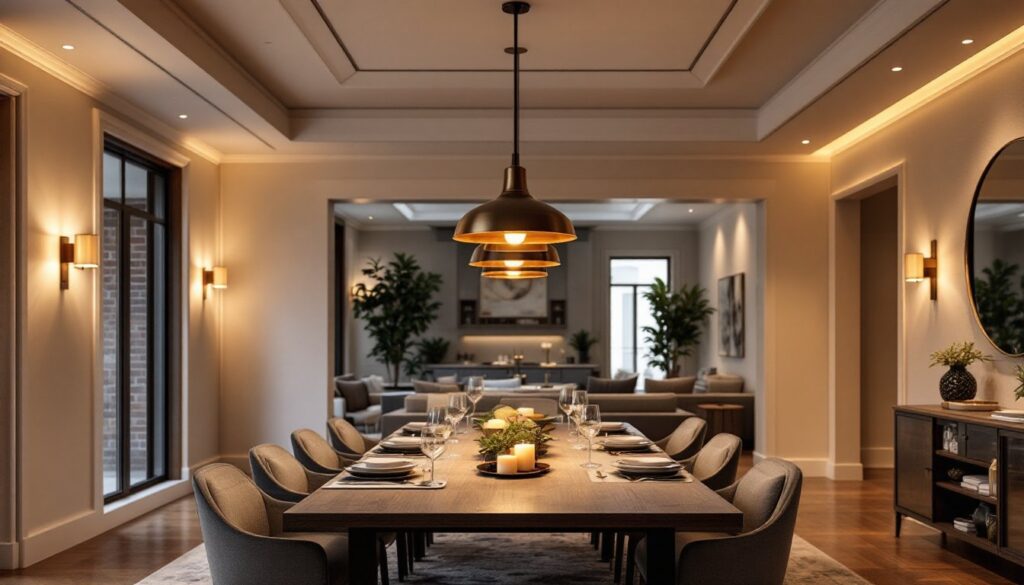
Ambient light typically comes from a central ceiling fixture or chandelier. Task lighting might be a pendant directly above the table or wall sconces flanking the space. Accent lights could be spotlights on artwork, candles, or under-rail LED strips. When layered correctly, you’re not locked into a single harsh brightness or murky dimness. Instead, you adjust each layer independently to match the occasion. A formal dinner might use all three layers at moderate levels: a relaxed lunch might rely mostly on ambient light plus natural window glow.
The payoff is flexibility without rewiring. A room designed for single-point lighting often feels either washed out or cave-like. Layered lighting solves that. Even a modest space benefits dramatically. Start by assessing what you already have, a ceiling fixture, wall sconces, perhaps a decorative lamp, then identify gaps. For example, if your central fixture doesn’t reach the far corners, adding a well-placed sconce fills that dead zone.
Chandelier Statements: Making a Bold Centerpiece
A chandelier is often the focal point of a formal dining room, the fixture that announces “this is where important meals happen.” The catch is scale and proportion. A chandelier that’s too small feels lost: one that’s too large dominates awkwardly and can obstruct sightlines if hung too low.
Use this rough rule: the diameter of the chandelier (in inches) should be about 10–12 inches less than the room’s width or length, whichever is smaller. So a 12-foot-wide dining room suits a 48–50-inch fixture comfortably. For ceiling height, the bottom of the chandelier should hang 30–36 inches above the dining table surface. If your ceiling is vaulted or higher than standard 8 feet, adjust upward proportionally.
Transform Your Space with Multi-Light Chandeliers: Style, Function, and Elegance offer traditional crystal or modern sculptural designs, but don’t overlook simpler brass or wrought-iron options that cost far less and suit contemporary spaces just as well. The key is fit: a heavy ornate chandelier clashes in a minimal Scandinavian room, just as a sleek modernist piece looks out of place in a period Colonial dining room.
Wiring a chandelier requires shutting off power at the breaker and often demands a helper to hold it steady during installation. If you’re uncomfortable with ceiling wiring or your fixture requires a heavy-duty mounting bracket, hire an electrician, it’s one of those tasks worth the cost to avoid damage or safety issues.
Pendant Lights and Task Lighting Solutions
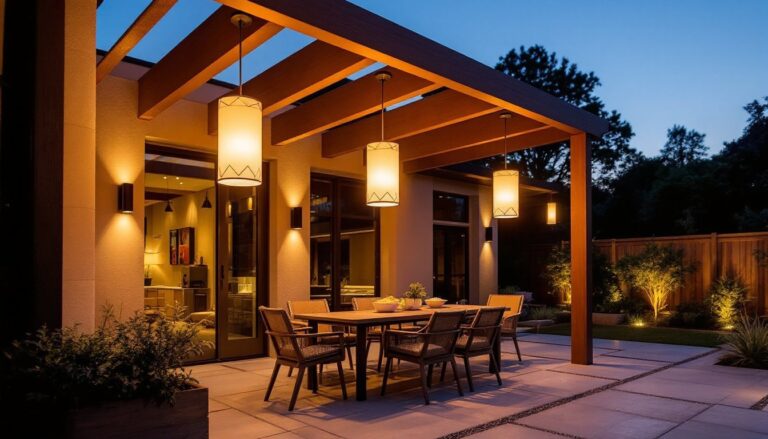
Pendant lights hang from the ceiling on a cord or rod, focusing light downward. In dining rooms, they’re often positioned directly over the table in pairs or trios, creating intimate pools of light. Unlike a central chandelier, pendants let you light the table without flooding the entire room, making them ideal for open floor plans where the dining area blends with the kitchen or living room.
Task lighting means light directed at a specific work area, in this case, the dining table. Well-positioned pendants ensure you can actually see your food and faces without squinting or relying on eye strain. The ideal height is 12–20 inches above the table, though this varies by fixture style and cord length. Too high and the light scatters: too low and it becomes an obstruction. Measure before you install.
When choosing pendant fixtures, consider how much light they output (measured in lumens) and whether the bulbs are dimmable. A pair of 60-watt-equivalent LED pendants works well for most 4×6-foot tables, but 10×10-foot gathering tables might need three pendants or higher-output bulbs. Visit your local hardware store or a site like MyDomaine for style inspiration, then buy fixtures rated for dining use, they’re designed for that height and brightness profile. Installation usually involves running a new circuit from the electrical panel or tapping into an existing ceiling box, so again, an electrician is a smart investment if you’re not experienced with wiring.
Dimmable Fixtures: Control the Mood Instantly
Dimmers are the unsung heroes of dining room lighting. A dimmable fixture lets you drop the brightness for an intimate dinner, then crank it up for Sunday morning pancakes and assignments. This single feature multiplies the usability of any fixture.
Here’s what to know: not all bulbs are dimmable. Older incandescent bulbs dim naturally, but many modern LEDs require a dimmable LED bulb paired with a dimmable switch. Check the bulb’s packaging, it should explicitly say “dimmable.” Non-dimmable LEDs on a dimmer circuit will flicker, hum, or fail early. It’s a small detail that catches many DIYers by surprise.
Dimmable fixtures also open the door to smart home integration. A smart dimmer switch or WiFi-connected bulb lets you adjust brightness from your phone or voice commands, handy when hands are full or the lighting scheme needs tweaking without physically reaching the switch. These don’t require special wiring beyond what a standard dimmer needs: they’re a plug-and-play upgrade for most homes.
When retrofitting existing lights, a new dimmer switch installation is straightforward if you’re comfortable at the breaker panel and basic wiring. If not, an electrician will finish the job in an hour for modest labor cost. The bulbs themselves are where you save money long-term: dimmable LEDs cost a bit more upfront but draw a fraction of the power of incandescent alternatives.
Modern and Transitional Lighting Styles
Modern dining room lighting skews toward clean lines, industrial materials like brushed steel or black metal, and geometric shapes. Think geometric pendant clusters, linear track fixtures, or minimalist hanging lamps. These styles complement open kitchens and contemporary furniture.
Transitional design splits the difference: it borrows modern simplicity but softens it with traditional warmth. A brushed nickel chandelier with fabric shades, or a set of pendants with Edison-style bulbs, fits this middle ground. Transitional works beautifully if your home mixes eras or you simply want something that won’t feel dated in five years.
Visual Comfort Lighting Fixtures represent the upper end of the market, engineered for quality diffusion and longevity. They’re pricier, but the light quality and durability often justify the cost for a room you use daily. Budget alternatives exist, big-box stores stock modern and transitional options, but compare brightness output (lumens) and warranty length. A cheaper fixture that outputs dimmer light or fails after two years isn’t a bargain.
Designers often recommend House Beautiful and similar publications for exploring style trends before committing to a fixture. Scroll through dining room galleries to see how pendants or chandeliers work in real spaces, then note the styles that resonate. This saves you from buying something that looked good in a showroom but doesn’t fit your home’s aesthetic.
Practical Tips for Installation and Placement
Before drilling holes or cutting wires, measure twice. The dining table position is your anchor point. If you’re installing a chandelier or pendant, it should hang centered over the table. For most tables, this means the fixture is roughly centered in the room, but not always, if your table is positioned off-center (common in open-plan homes), the lighting follows the table, not the room.
For ceiling boxes (where existing fixtures live), check the weight rating. Ceiling boxes rated for fans often handle chandeliers, but old boxes might be shallow or undersized. A heavy fixture installed on an undersized box will crack drywall or fall. If you’re unsure, an electrician can inspect and upgrade to a heavy-duty box if needed.
Electrical codes vary by region, but the basic rule: any new fixture requires a circuit that won’t overload. Most dining room circuits handle 15–20 amps: add up the wattage of all fixtures on that circuit to ensure you’re below the limit. An electrician will confirm this during inspection. If you’re adding entirely new wiring, a permit is often required, and a final electrical inspection is mandatory in most municipalities.
Wall sconces deserve mention here: they’re excellent for ambient and accent light, and installation is simpler than ceiling fixtures since you’re only drilling into stud framing (located 16 inches apart). Use a stud finder, then drill pilot holes for wall anchors if you can’t hit studs. Sconces flanking a sideboard or buffet area are both functional and decorative. Spacing: typically 60–66 inches above the floor, and 3–4 feet apart if installing a pair.
For installing under cabinet lighting or kitchen sink lighting, similar principles apply, height matters, circuit capacity matters, and often an electrician is worth the expense to avoid mistakes that show up once the walls are closed.
Conclusion
Dining room lighting isn’t a one-switch-fits-all scenario. The best approach layers different sources, scales fixtures to your room, and includes dimmers so the mood can shift with the occasion. Whether you lean toward a grand chandelier, modern pendants, or transitional hybrids, focus on what actually works for your space and habits. A well-lit dining table does more than illuminate food, it invites people to linger, talk, and enjoy time together. Take the time to plan thoughtfully, and your dining room will shine for years to come.