Outdoor lighting can make or break your yard after dark. A well-lit landscape doesn’t just look inviting, it adds security, extends usable living space, and can boost curb appeal significantly. Sollos landscape lighting has emerged as a popular choice for homeowners who want reliable, modern illumination without the complexity of running traditional electrical lines everywhere. Whether you’re aiming to highlight garden beds, accent architectural features, or simply make your patio safer at night, understanding how Sollos systems work and how to install them properly will help you nail this project.
Table of Contents
ToggleKey Takeaways
- Sollos landscape lighting uses a wireless hub-and-spoke design that eliminates trenching and complex wiring, making it ideal for DIY homeowners without electrician expertise.
- LED fixtures in Sollos systems consume 1-5 watts per light and last 25,000+ hours, reducing energy costs and replacement frequency compared to traditional halogen bulbs.
- Proper spacing and layering of path lights (8-12 feet apart), spotlights (10-15 feet from focal points), and accent lights creates depth and prevents a flat lighting appearance.
- The app-based control system allows scheduling, brightness adjustments, and voice assistant integration, offering both convenience and security by making homes appear occupied.
- Monthly lens cleaning, battery maintenance, and seasonal vegetation trimming are simple upkeep tasks that keep Sollos fixtures running optimally year-round.
What Makes Sollos Landscape Lighting Stand Out
Key Features and Design Philosophy
Sollos landscape lighting focuses on simplicity and reliability. Unlike traditional low-voltage systems that require extensive trenching and wiring, Sollos uses a hub-and-spoke design where fixtures connect wirelessly to a central controller. This means fewer installation headaches and easier troubleshooting if something goes wrong.
The fixture lineup includes path lights, spotlights, accent lights, and wall-mounted options. Most use LED technology, which runs cooler, lasts longer (often 25,000+ hours), and costs far less to operate than older halogen or incandescent bulbs. The modular nature of the system lets you start small and expand later, you’re not locked into a massive upfront installation.
One standout feature is the app-based control system. You can schedule lights to turn on at sunset, adjust brightness from your phone, and even create scenes (“entertaining mode,” “movie night,” etc.). Smart home integration means compatibility with platforms like Alexa or Google Home, depending on the model. This flexibility appeals to DIYers who want automation without hiring an electrician.
Sollos fixtures are typically made from powder-coated aluminum or stainless steel, designed to weather UV exposure, rain, and temperature swings. The industrial-grade construction keeps maintenance minimal compared to cheaper plastic fixtures that degrade after a season or two.
Installation and Setup Guide for DIY Homeowners
Installing a Sollos system is well within reach for a confident DIYer. You won’t need to dig trenches, run conduit, or pull permits for a typical residential setup (though always check local codes). Here’s the general workflow.
Step 1: Unbox and charge the hub. The control unit usually arrives with a rechargeable battery or needs to plug into a standard outlet. Give it a full charge before starting, this prevents mid-project frustration.
Step 2: Prepare your installation area. Decide where fixtures go. Path lights typically space 8–12 feet apart along walkways: spotlights work best 10–15 feet from the objects they’ll highlight (trees, statues, building facades). Mark positions with stakes or chalk.
Step 3: Position fixtures. Most Sollos lights come with simple stakes or mounting brackets. Press path lights into soil, align spotlights toward focal points, and secure wall lights with included hardware (usually screws into wood or concrete anchors). Avoid dense shade where wireless signals weaken.
Step 4: Pair fixtures to the hub. Open the Sollos app, add a new device, and follow the pairing prompts. The system typically recognizes each fixture within 30–50 feet of the hub. Position the hub centrally for best coverage.
Step 5: Test and adjust. Turn on all lights, check for dark spots, and reposition any fixtures that don’t get sufficient signal strength. Concrete walls and metal structures can block wireless signals, so keep that in mind if coverage is patchy.
Tools and materials you’ll need:
- Sollos hub and fixtures (qty depends on your layout)
- Screwdriver (Phillips or flathead, depending on brackets)
- Cordless drill (optional, for hardscape mounting)
- Level (to ensure spotlights point true)
- Level ground or soil amendments (for proper drainage around fixture bases)
Safety notes: Even though Sollos uses low-voltage DC power, handle battery terminals carefully. Don’t submerge fixtures unless they’re rated submersible. When digging to mount stakes, look for buried utilities first, call 811 in the US to mark underground gas, water, and electrical lines.
Designing Your Landscape Lighting Layout
A good lighting design balances aesthetics, function, and energy use. Start by identifying your goals: safety (illuminating entryways and steps), ambiance (soft accent lighting), or drama (uplighting tall trees or architectural details).
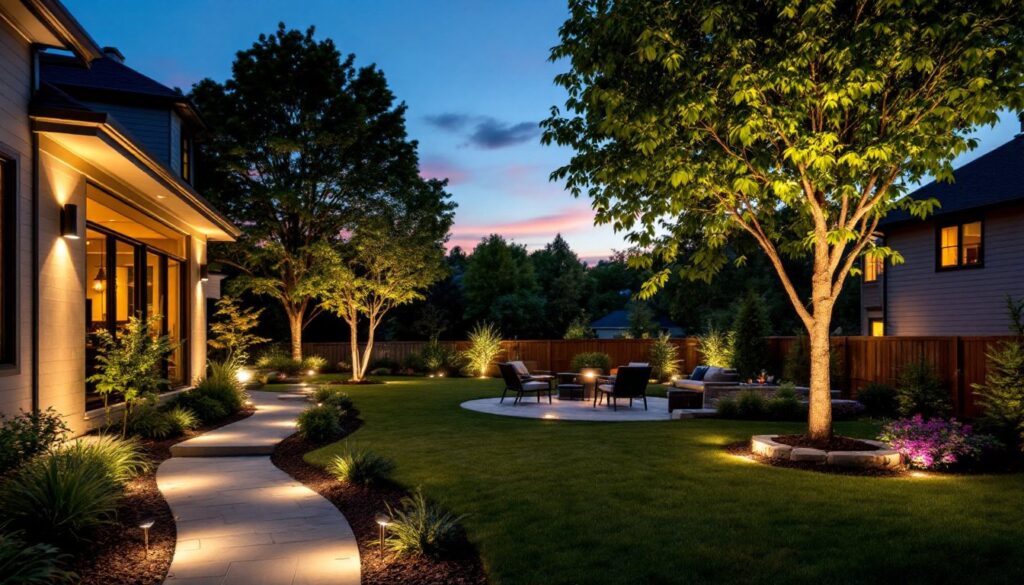
Layer your light. Use a mix of fixture types. Path lights provide ambient safety lighting along walkways. Spotlights add visual interest by highlighting trees, plantings, or stonework. Wall-mounted fixtures brighten seating areas and entries. This layering prevents a flat, one-dimensional look and creates depth.
Plan focal points. Rather than lighting your entire yard uniformly, identify two or three features worth highlighting. A specimen tree, a water feature, or a striking fence line becomes much more dramatic when spotlit from below or from the side. Shadows cast by trees silhouetted against lit foliage create sophisticated visual interest.
Consider color temperature. Most Sollos fixtures come in warm white (2700K–3000K) or cool white (4000K–5000K). Warm light feels inviting and is often better for living spaces and patios. Cool white reads more like natural daylight and works well for task lighting near entries or security areas. Mixing temperatures can look jarring, so stick to one unless you have a specific design reason.
Account for viewing angles. Fixtures along a driveway should illuminate the ground, not create glare in eyes. Uplight trees from below to silhouette foliage. Accent lights on building walls should angle at 30–45 degrees to avoid washing out texture. Small adjustments make a big difference.
Sketch a rough plan. Use a phone photo of your yard, print it, and sketch fixture placement. This helps you visualize coverage and catch blind spots before buying fixtures. Outdoor ceiling lighting and modern wall mounts work well as anchors, so consider how adjacent fixtures might complement Sollos pieces.
Energy Efficiency and Smart Control Benefits
LED technology in Sollos fixtures draws a fraction of the power of older halogen systems. A typical path light uses 1–2 watts: a spotlight, 3–5 watts. A traditional halogen landscape system of similar brightness might pull 20–50 watts per fixture. Over a season, the savings add up, especially if lights run 8–12 hours nightly.
Smart scheduling amplifies those savings. Set lights to turn on at sunset (the app adjusts automatically based on your location’s day-length) and off at midnight or sunrise. No more accidentally leaving outdoor lights on all night. Dim non-essential areas to 50% brightness on off-peak evenings to further cut consumption.
Battery-powered hubs are rechargeable: plug-in models draw negligible standby power. Wireless operation eliminates the phantom load of traditional low-voltage transformers (which run 24/7 if hardwired). If your area has time-of-use rates, you can schedule peak brightness during off-peak hours, another edge for cost-conscious households.
Remote control via phone or voice assistant adds convenience. Forget to turn lights off before a vacation? Toggle them on the app. Unexpected guests? Brighten the patio in seconds. Tired of coming home to darkness? Pre-schedule lights to brighten as you arrive. These small conveniences also enhance security by making homes appear occupied.
The long LED lifespan (often 25,000 hours or more) means fewer replacements. A typical path light running 10 hours nightly lasts 6+ years, way longer than incandescent or halogen bulbs that burn out after one season.
Maintenance and Seasonal Care Tips
Sollos fixtures are low-maintenance by design, but a few seasonal checks keep them running strong.
Monthly basics: Wipe fixture lenses and solar panels (if applicable) with a soft, damp cloth. Dust accumulation blocks light output and is usually the cause of seemingly “dim” fixtures. Check that stakeholders are still firmly seated in soil, frost heave and settling can loosen them over winter.
Battery care: If your hub runs on rechargeable batteries, charge it fully before winter and every 2–3 months during off-season storage. Lithium and lead-acid batteries age faster if left deeply discharged. Store indoors in a climate-controlled space if you plan to shut the system down for extended periods.
Weather prep: Before heavy snow or ice, sweep snow away from fixture lenses. Check that drainage around path lights isn’t pooling water, which can freeze and damage seals. Most Sollos fixtures are weather-sealed, but ensure no cracks or gaps have appeared. Replace any cracked lens immediately, it’ll keep working but UV will degrade internals faster.
Fall cleanup: Clear leaf debris from around fixtures. Leaves block light paths and trap moisture. Trim back vegetation that’s grown over spotlights during the summer, you want clear sightlines to architectural features and trees.
Winter storage (optional): In harsh climates, you can unplug or remove hub and fixtures after the growing season, store them indoors, and reinstall in spring. This extends equipment life, but most modern Sollos fixtures tolerate year-round outdoor use. Just ensure the hub isn’t exposed to standing water or direct rain if it’s not rated for it.
App maintenance: Keep your Sollos app updated. Periodic firmware updates improve performance, add features, and patch any connectivity bugs. Check the app settings annually to confirm scheduling is still appropriate for your current sunrise/sunset times.
Conclusion
Sollos landscape lighting delivers professional-grade results without the contractor overhead or complex electrical work. The modular system, wireless control, and energy efficiency make it ideal for DIYers who want reliability and flexibility. Whether you’re lighting a small entry path or a sprawling backyard, starting with a clear design, careful installation, and simple maintenance will ensure your outdoor space shines for years. Take time in the planning phase, and you’ll end up with a landscape that looks great and functions reliably every night.