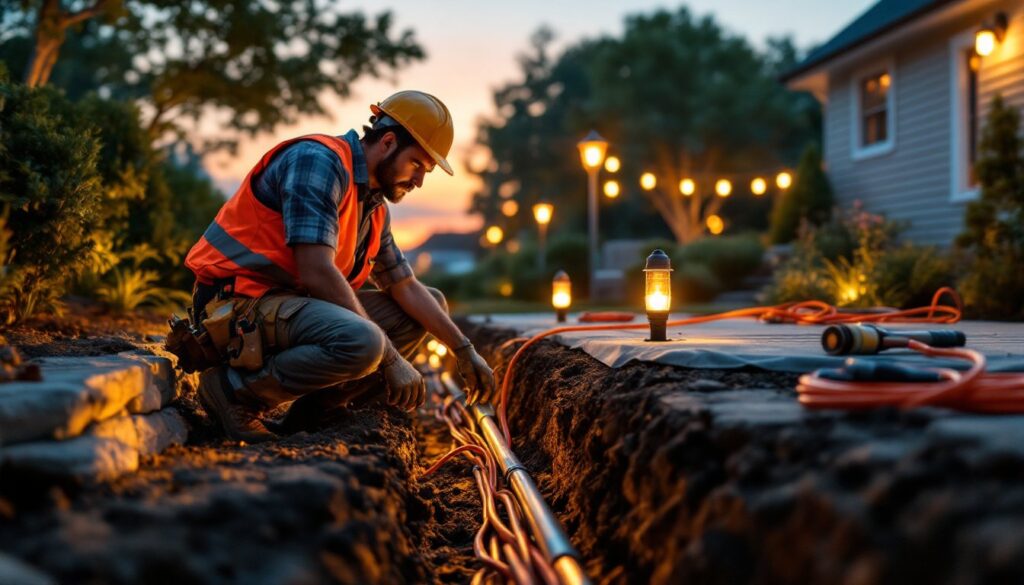
Outdoor lighting transforms a yard from a dark afterthought into a functional, beautiful extension of your home, but getting it right requires more than stringing up a few solar stakes. Whether you’re illuminating a pathway, adding ambiance to a deck, or ensuring your entryway is visible and safe at night, the work typically demands electrical expertise that goes beyond typical DIY territory. An outdoor lighting electrician can handle everything from running weatherproof circuits to installing fixtures that meet local code, but knowing when to call one, what projects they tackle, and how to find a trustworthy pro makes the difference between a project that looks sharp and works reliably for years and one that becomes an expensive headache. This guide walks you through the essentials.
Table of Contents
ToggleKey Takeaways
- An outdoor lighting electrician becomes essential when projects require running electrical wire underground, hardwired fixtures drawing 120 or 240 volts, or any work exceeding 30 volts that may require permits and inspections.
- Landscape and pathway lighting typically uses safe low-voltage transformers (12V) and often doesn’t require permits, while deck and patio lighting demands hardwired circuits with GFCI protection due to moisture exposure.
- Professional outdoor lighting installations follow a structured sequence: planning and layout, permit and inspection, electrical work, testing and programming, and final cleanup—protecting both safety and property value.
- Verify that your outdoor lighting electrician carries current licensing, liability insurance, and workers’ compensation before hiring, and always require a formal contract with itemized materials, labor, permits, and timeline.
- Get at least three competitive bids and compare apples-to-apples, checking for quality differences in fixtures, proper GFCI protection, and conduit standards rather than choosing solely on price.
- A reliable outdoor lighting electrician will walk you through operation, provide warranty details on workmanship (typically 1–2 years), and explain how to maintain or replace fixtures for long-term reliability.
When to Hire an Outdoor Lighting Electrician
Not every outdoor lighting job requires a licensed electrician. A solar pathway light you stake into the ground? Pure DIY. A string of LED café lights hung from existing structures on battery power? You’ve got this. But the moment you need to run electrical wire underground, connect to your home’s main panel, install hardwired fixtures that pull 120 or 240 volts, or work anywhere a permit might be required, that’s when a professional electrician becomes essential.
Most jurisdictions mandate that any outdoor electrical work exceeding 30 volts draws from a licensed electrician or must be inspected before sign-off. Deck lighting wired into a GFCI circuit, landscape lighting tied to your home’s power supply, and smart outdoor lights integrated with your electrical system all fall into this category. Beyond code compliance, there’s the safety angle: buried wire without proper conduit, undersized circuits, or improper grounding can lead to shorts, fires, or electrocution. Insurance may also deny claims if unlicensed work caused damage. When in doubt, get a quote from a local electrician, most offer free estimates and can tell you upfront whether a permit is needed.
Common Outdoor Lighting Projects an Electrician Can Handle
An outdoor lighting electrician’s toolkit covers a wide spectrum of residential jobs. Understanding what falls under their purview helps you budget and plan.
Landscape and Pathway Lighting Installation
Landscape and pathway lighting is one of the most popular upgrades electricians handle. These systems typically run on low-voltage transformers (12V) that step down standard household current, making them safer than hardwired 120V systems and often not requiring a permit in many jurisdictions. The electrician runs weatherproof cable through underground conduit to remote fixtures, connects the transformer to a GFCI outlet near your main structure, and installs fixtures along planting beds, walkways, or driveways.
The electrician will assess your layout, calculate the transformer size based on total wattage (a common mistake homeowners make), ensure proper spacing to avoid dark gaps, and use commercial-grade components, not consumer-grade landscape lighting kits prone to failure. This is where an electrician’s knowledge pays dividends: they’ll advise whether you need a photocell (auto on/off at dusk), a timer, or smart controls, and they’ll ensure the transformer sits in a dry location with proper weatherproofing.
Deck, Patio, and Pergola Lighting
Deck and patio lighting often demands hardwired circuits and GFCI protection since these spaces are subject to moisture. An electrician will run weatherproof cable in conduit either underground or along the rim board (the band board connecting floor joists), often tying into a dedicated breaker on your main panel. Installation might include under-rail lights, soffit lights, string light supports with hardwired endpoints, or recessed deck lighting.
Pergola lighting presents a different challenge: it’s exposed and often spans a larger area. An electrician will plan the route for conduit, install boxes and fixtures at appropriate intervals, and ensure all connections are within the structure’s soffits or other protected areas. For pergolas attached to the home, the work ties directly to the house electrical system. Free-standing pergolas might use a sub-panel or low-voltage transformer, depending on the design and local code.
What to Expect During an Outdoor Lighting Installation
A typical outdoor lighting installation follows a logical sequence, though specifics vary by scope and site conditions.
Planning and Layout: The electrician begins by walking your property, discussing fixtures, brightness levels (measured in lumens), color temperature (warm 2700K vs. cool 5000K), and smart-home integration if desired. They’ll sketch the layout, identify the best route for conduit and cable to avoid roots and utilities, and pinpoint connection points. This phase reveals any complications: tree roots in the trench path, proximity to existing utilities, or structural obstacles that add cost and time.
Permit and Inspection: Depending on the project, a permit may be required. The electrician typically handles the application and follows up with inspections at key stages, after trenching, after conduit installation, and before final sign-off. This adds 1–3 weeks to the timeline but ensures the work meets code and protects your property value and insurance.
Electrical Work: Next comes running conduit, pulling wire, installing boxes, and connecting fixtures. For landscape lighting, this might take a day or two: for hardwired deck or patio systems, a few days. The electrician will use appropriate cable (UV-rated, outdoor-rated jacket), properly size the circuit breaker, and install GFCI outlets or breakers as required. You’ll see trenches dug, conduit laid or attached to structures, and fixtures temporarily hung for testing.
Testing and Programming: Before final approval, the electrician tests every circuit with a multimeter, checks voltage and ground continuity, confirms GFCI function, and programs any timers or smart controls. They’ll walk you through operation, how to adjust brightness (if dimmable), turn on/off scenes, and maintain or replace fixtures.
Cleanup and Handoff: A professional electrician fills trenches, compacts soil, and restores your yard. You’ll receive documentation: circuit diagrams, fixture specifications, warranty details, and maintenance notes.
Choosing the Right Outdoor Lighting Electrician for Your Home
Finding a reliable electrician is as much about diligence as it is about luck. Start by asking neighbors and friends for referrals, word-of-mouth remains the most trustworthy source. Check online reviews on Google, Yelp, or local directories, but read critically: a contractor with 20 five-star reviews and zero negatives may be new, while one with 100 reviews and a 4.7 average is likely seasoned and has handled hiccups professionally.
Verify licensing and insurance before requesting a bid. A licensed electrician carries a current license (searchable on your state or local licensing board’s website), carries liability insurance, and carries workers’ compensation if they employ others. Never pay cash-only contractors: insist on a formal contract and an invoice.
Get at least three bids and compare apples to apples. A bid should itemize materials, labor, permits, and timeline. If one bid is significantly lower, ask why, is the electrician using lower-grade fixtures, skipping GFCI protection, or cutting corners on conduit? Cost estimators like HomeAdvisor and ImproveNet let you research typical pricing in your area, and outdoor lighting installation cost guides provide benchmarks so you recognize unrealistic quotes.
Once you’ve chosen a contractor, ask upfront about warranty on workmanship (most offer 1–2 years) and fixture warranties, which vary by brand. Clarify the scope: does it include fixture selection, or are you providing those? Are permits included in the quote? When does work start and how long will it take? A clear contract prevents misunderstandings and gives you recourse if work isn’t completed as promised.
For design help, some electricians collaborate with landscape designers or architects: if you’re uncertain about fixture placement or style, ask whether they offer that consultation. Others will install what you specify, period. Both approaches are valid, just know what you’re getting.
Conclusion
Hiring an outdoor lighting electrician is an investment in both safety and aesthetics. Unlike cosmetic upgrades, electrical work carries real risk if done improperly, making professional expertise worthwhile. Start by identifying your goals, get multiple quotes, verify credentials, and choose an electrician who listens to your vision and explains the work clearly. The result, a lit, welcoming yard that works reliably for years, is well worth the cost.