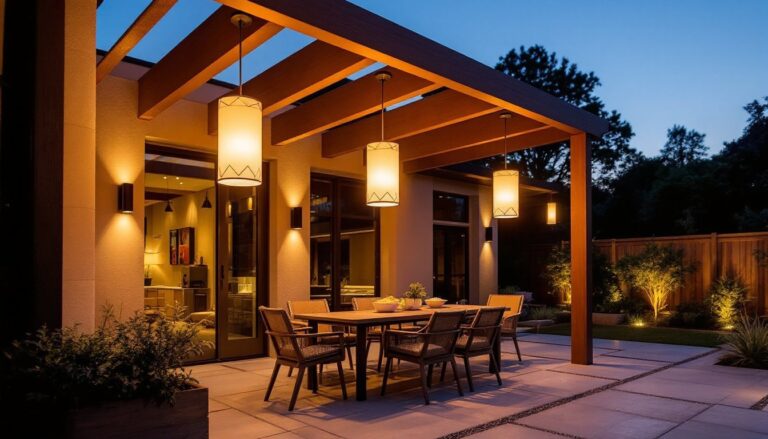
When dusk falls, your outdoor spaces shouldn’t disappear into darkness. LED outdoor flood lighting fixtures deliver the brightness you need while cutting energy costs by up to 75% compared to traditional halogen or incandescent bulbs. Whether you’re lighting a backyard patio, securing your home’s perimeter, or highlighting landscaping features, understanding how to choose and install the right outdoor flood lighting fixtures makes all the difference. This guide walks you through selecting, installing, and maintaining LED flood lights, no contractor markup required.
Table of Contents
ToggleKey Takeaways
- LED outdoor flood lighting fixtures cut energy costs by up to 75% compared to halogen or incandescent bulbs while lasting 25,000–50,000 hours versus just 2,000–5,000 for older models.
- Choose the right fixture type—spotlights for accent lighting, area lights for broad coverage, wall-mount options for security, and motion-sensor models to deter trespassers while reducing energy waste.
- Check lumens (brightness), color temperature (3000K for cozy, 5000K for security), IP rating (IP65 minimum), and beam angle when selecting LED flood lights to match your specific outdoor space.
- Most homeowners can install plug-in LED flood lighting fixtures using basic tools and a weatherproof extension cord, but hardwired installations require a licensed electrician and local permit approval.
- Maintain LED flood lights by cleaning lenses every 6–12 months, checking fasteners annually, and replacing hardware with stainless steel to prevent corrosion and extend fixture lifespan.
- Despite higher upfront costs ($30–$150 per unit), LED flood lights recoup initial investment within five years through lower electricity costs and minimal maintenance.
Why LED Outdoor Flood Lights Are the Smart Choice for Your Home
LED flood lights have become the go-to option for homeowners, and for good reason. Unlike older incandescent or halogen models, LEDs produce more lumens per watt while generating far less heat. That means brighter illumination on lower energy bills, a combination that compounds over years of use.
The lifespan difference is staggering. A quality LED flood light lasts 25,000 to 50,000 hours, while halogen bulbs typically burn out after 2,000–5,000 hours. If you’re running outdoor lighting for 8 hours nightly, an LED fixture might outlast halogen by a decade or more. That translates to fewer bulb replacements and less ladder work.
Durability matters too. LEDs handle temperature swings, moisture, and vibration far better than filament bulbs. Most quality outdoor LED flood lighting fixtures come with IP65 or higher ratings, meaning they’re sealed against dust and water spray. This matters if you live where rain, salt spray, or fog is common.
Cost-wise, yes, LED fixtures cost more upfront, typically $30–$150 per unit versus $10–$40 for halogen. But the operating cost gap closes fast. Running a 50W halogen floodlight 8 hours daily costs roughly $35–$50 annually in electricity: a comparable 10W LED costs $5–$8. Over five years, you’ll recoup the initial difference and pocket real savings.
Types of LED Flood Lights and How to Choose the Right One
Spotlights, Area Lights, and Wall-Mount Options
Flood lights come in distinct flavors, and matching the right type to your space saves you from buyer’s remorse.
Spotlights emit a narrow, concentrated beam, typically 15° to 30°. They’re ideal for highlighting a tree, statue, or architectural detail. If you want dramatic accent lighting, spotlights are your pick. But, they don’t illuminate broad areas well.
Area lights or wide-beam flood lights spread light across 90°–120°, covering larger spaces like patios, driveways, or yards. These are your workhorses for general outdoor lighting. Family Handyman’s round-up of best floodlights emphasizes wide-beam LED options for homeowners tackling outdoor spaces.
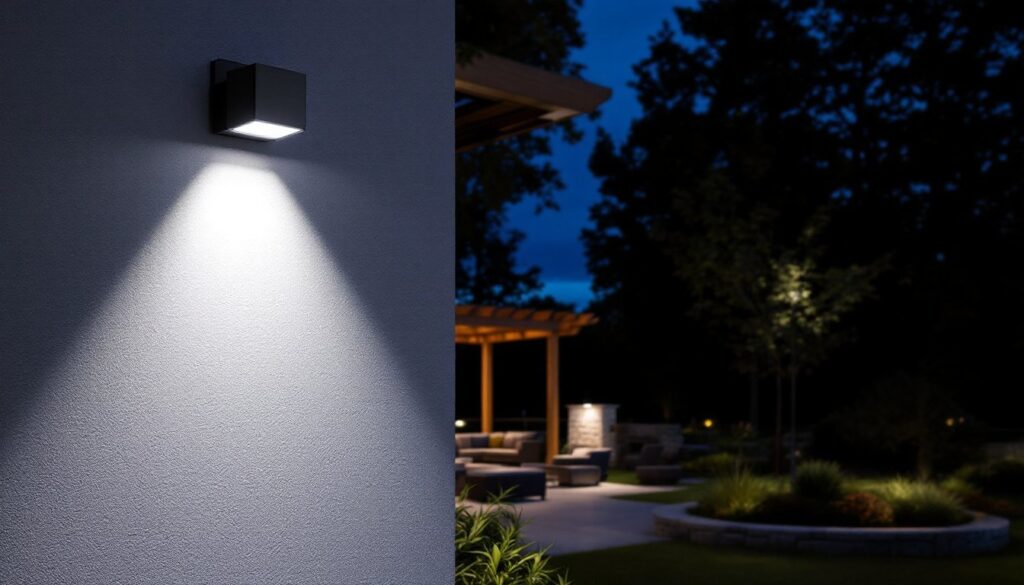
Wall-mount flood lighting fixtures fasten directly to siding, fences, or posts. They’re compact, unobtrusive, and great for security. Outdoor wall lighting modern designs blend function with contemporary aesthetics, letting you combine safety with style.
Motion-sensor flood lights add security by triggering only when movement is detected. They’re perfect for entryways, side yards, or anywhere you want to deter trespassers while cutting energy waste. Some models include adjustable sensitivity and timer overrides.
Choosing hinges on three questions: What area do I need to light? Do I want general illumination or accent lighting? Do I need security features like motion detection? Answer those, and the type becomes obvious.
Key Features to Look for When Selecting Fixtures
Not all LED flood lights are created equal. Here’s what separates solid performers from duds.
Lumens and Wattage: Lumens measure brightness: watts measure energy draw. You’ll see LED flood lights ranging from 500 lumens (dim accent) to 5,000+ lumens (bright work lighting). A 20W LED typically produces 2,000–2,500 lumens, enough for a medium patio. For comparison, that matches a 150W–200W halogen. Check the product spec sheet, not just the wattage. Higher wattage doesn’t always mean brighter if the LED is inefficient.
Color Temperature: Measured in Kelvin (K), this determines whether light looks warm (orange-ish) or cool (blue-ish). Outdoor flood lighting fixtures usually come in 3000K (warm, cozy), 4000K (neutral), or 5000K (bright, daylight). Warm light suits patios and entertaining: cooler light works better for security and visibility. Pick based on the mood and function you need.
IP Rating: This indicates dust and water resistance. IP65 means dust-tight and protected from water jets. IP67 means temporary immersion is okay. For outdoor use, IP65 is a minimum: IP67 is better if you’re near water or in a wet climate.
Beam Angle: Narrow (15°–30°) for spotlighting, medium (30°–60°) for targeted areas, wide (90°–120°) for general coverage. Your space determines the right choice.
Dimmability: Some LED floods pair with dimmers for flexible mood lighting. Confirm the fixture and your dimmer are compatible before buying, not all LED floods dim smoothly.
Warranty: Quality LED floods come with 2–5 year warranties. This signals manufacturer confidence. Anything less than 2 years is risky.
Installation Tips for Optimal Performance and Safety
Installation difficulty varies by mounting method. Wall-mount fixtures are straightforward: pole mounts require more work.
Before You Start: Turn off power at the breaker. If hardwiring (running cable from your home’s electrical panel), you’ll likely need a permit and may need to hire a licensed electrician, depending on your local building code. Check with your city or county before assuming it’s DIY-safe.
Step 1: Choose Your Mounting Location: Pick a spot with a clear line of sight to the area you want to light. Account for shadows from trees or structures. Mount fixtures 8–12 feet high for even coverage: higher spots reduce shadows but require sturdier mounting hardware. Outdoor ceiling lighting principles apply here, height and angle are everything.
Step 2: Gather Materials and Tools: You’ll need a power drill (or impact driver for faster work), ladder, wire strippers (if hardwiring), electrical tape, weatherproof junction box (if hardwiring), exterior-grade caulk, and stainless steel fasteners (galvanized hardware corrodes outdoors). Wear work gloves, safety glasses, and a dust mask when drilling.
Step 3: Mount the Bracket: Locate studs or use heavy-duty anchors (not cheap plastic: use toggle bolts for hollow walls). Drill pilot holes to prevent cracking. Fasten the bracket firmly, it must support the fixture’s weight and wind load.
Step 4: Wire or Plug In: For plug-in models, run a weatherproof extension cord (rated for outdoor use) to the nearest GFCI-protected outlet. Never use indoor cords outside: they degrade quickly. For hardwired installation, connect the fixture’s leads to your home’s circuit via a weatherproof junction box, using appropriate gauge wire (typically 12 AWG for most residential applications). Use wire nuts or lever-lock connectors rated for outdoor use, and caulk the junction box seam with exterior caulk to keep moisture out.
Step 5: Aim and Test: Adjust the fixture’s angle to light your target area. Turn on power and confirm brightness meets your needs. If uneven, reposition the fixture or add another. Digital Trends’ security light guide covers placement strategies that maximize coverage and minimize wasted spillover.
Safety Note: If you’re uncomfortable working with electricity or climbing ladders, hire a licensed electrician or handyperson. A fall or shock injury isn’t worth the DIY savings.
Maintenance and Longevity: Making Your Investment Last
LED flood lights are low-maintenance, but a little care goes a long way.
Dust and Debris: Every 6–12 months, wipe the lens and housing with a soft, damp cloth. Dust buildup dims output gradually and traps heat. In salty or coastal climates, clean more frequently. Never use abrasive cleaners: they scratch polycarbonate lenses.
Loose Connections: Outdoor vibration and temperature cycles can loosen fasteners. Check mounting bolts and electrical connections annually, especially after storms. Tighten gently with the appropriate wrench or socket, over-tightening strips threads.
Corrosion: Stainless steel hardware lasts outdoors: galvanized steel lasts 5–10 years before rust appears. If rust forms, remove the fixture, replace the hardware with stainless steel, and reinstall. It’s cheaper than replacing the whole unit.
Dimmer Compatibility: If using a dimmer, confirm it’s rated for LED loads. Old-school incandescent dimmers can cause flickering or premature LED failure. HomeAdvisor’s guides include troubleshooting tips if you encounter unexpected issues.
Replacement Cycles: While LEDs last decades, individual components can fail, a driver (power converter) or capacitor might die before the LED itself. Most quality fixtures have replaceable drivers, so you don’t have to scrap the whole unit. Check whether replacement parts are available before you buy.
Conclusion
LED outdoor flood lighting fixtures represent a practical upgrade that saves money, improves safety, and lets you reclaim your outdoor evenings. Start by identifying your lighting need, accent, area coverage, or security, then match the fixture type and specs to the job. Installation is achievable for most DIYers if you stick to plug-in models or ask a licensed electrician for hardwired work. Once installed, minimal maintenance keeps your lights running strong for years. The result: a well-lit outdoor space that’s both functional and energy-smart.