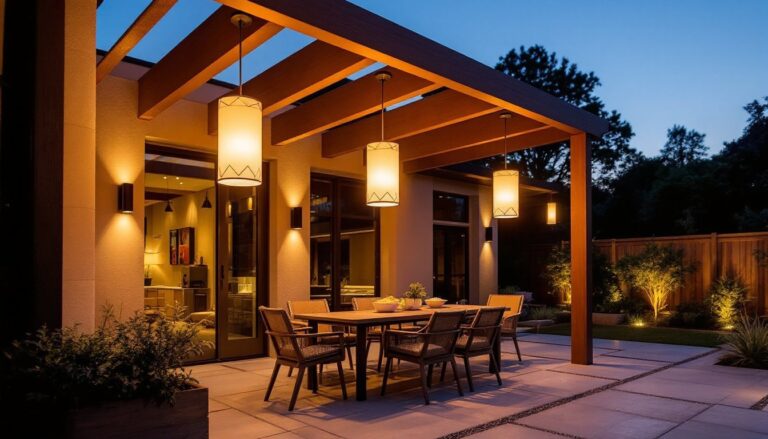
Your dining room is more than just a place to eat, it’s where memories happen. The right lighting sets the tone for family dinners, holiday gatherings, and intimate conversations. If you’re shopping for dining room lighting at Lowe’s, you’ve got plenty of options, but navigating them without a plan can feel overwhelming. This guide walks you through the essentials: understanding fixture styles, sizing for your space, creating the right ambiance, and tackling installation like a pro. Whether you’re replacing a single fixture or rewiring the whole room, you’ll find practical advice to match your skill level and design goals.
Table of Contents
ToggleKey Takeaways
- Dining room lighting at Lowe’s comes in multiple styles—from chandeliers to modern pendants—so choose based on your table size and room style to ensure the fixture fits both aesthetically and functionally.
- Size your fixture correctly by adding 12 inches to your table length; a 48-inch table needs a 60-inch-wide fixture to prevent undersizing and ensure even light distribution.
- Select fixtures with 2,000–3,000 lumens for formal dining and pair them with a dimmer switch to shift from bright task lighting during meal prep to warm, intimate ambiance for dining.
- Use warm-toned bulbs (2700K) with a Color Rendering Index (CRI) of 90 or above to flatter skin tones and enhance how food looks during meals.
- Hang fixtures 30–36 inches above the table, turn off power at the breaker before installation, and use a voltage tester for safety; call a licensed electrician if wiring looks old or unfamiliar.
Understanding Dining Room Lighting Styles and Types
Chandeliers and Statement Fixtures for Formal Dining
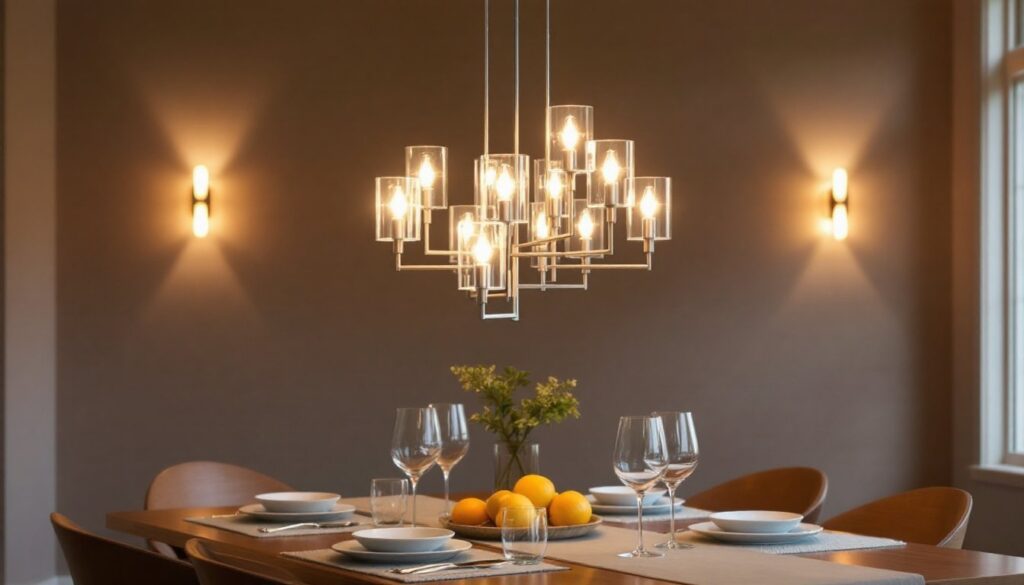
Chandeliers remain the go-to choice for formal dining rooms, they’re dramatic, they draw the eye upward, and they tell visitors you’ve thought about the space. A quality chandelier does real work: it provides ambient light while creating a focal point. Look for multi-light chandeliers with 4 to 8 arms for tables spanning 36 to 48 inches. The beauty of shopping at Lowe’s is you’ll find everything from crystal reproductions ($150–$400) to modern industrial styles ($300–$800). When evaluating a chandelier, check the lumen output (brightness measure) on the packaging, aim for 2,000 to 3,000 lumens for a formal dining space. Multi-light chandeliers stand out as a stunning choice for those looking to make a dramatic statement. Bronze, brushed nickel, and polished brass finishes are timeless: they resist looking dated better than trendy finishes.
If you want impact without a full chandelier, semi-flush mounts offer a modern hybrid. They hang closer to the ceiling and work well in rooms with lower ceilings (under 9 feet). Pendant clusters are another trend, three to five coordinated pendants hung at varying heights create visual interest and spread light more evenly than a single fixture.
Modern and Contemporary Options for Everyday Spaces
Not every dining room needs formality. Contemporary fixtures lean toward clean lines, geometric shapes, and mixed materials, glass, metal, wood, or concrete. These work especially well in open-concept homes where the dining area flows into the kitchen or living room. A sleek linear chandelier or a modern cage-style pendant creates visual continuity without disrupting sightlines.
Wooden lighting fixtures bring rustic charm while modern elegance to dining spaces. Wood-and-metal combinations are particularly popular right now, think Edison bulbs in a wooden frame or a walnut base with metal accents. Lowe’s carries several brands that balance farmhouse warmth with contemporary simplicity, often in the $200–$500 range. For smaller tables or intimate nooks, a single statement pendant, maybe 12 to 16 inches in diameter, works beautifully. For larger tables (60+ inches), you’ll want either a fixture with high lumen output or a multi-pendant setup.
How to Choose the Right Fixture Size and Brightness
Sizing isn’t guesswork, there’s a real formula. Measure your table length and add 12 inches to get the ideal fixture diameter. A 48-inch table calls for a 60-inch-wide fixture: a 60-inch table needs a 72-inch spread. This might sound large, but it prevents the fixture from looking undersized and ensures light reaches the whole table surface.
Brightness is measured in lumens, not watts anymore (since LED bulbs changed everything). A dining room fixture should deliver 300–500 lumens of bright light at the table surface, but that varies based on whether you want ambient mood lighting or task lighting for reading the menu. Check the product specs online or on the Lowe’s label, they’ll list total lumens for the fixture. A 48-inch chandelier with four 60-watt-equivalent LED bulbs typically outputs 2,000–2,400 lumens, which is solid for most dining rooms.
Height matters too. Hang the fixture so the bottom sits 30 to 36 inches above the table surface. Too high and light scatters: too low and it blocks sightlines. If you have a vaulted ceiling, measure from the highest point and aim for 7 feet minimum clearance between the fixture and anyone standing nearby.
Think about the room’s other light sources. If you have a wall sconce, recessed lights, or a dimmer-controlled backup, you can get away with a fixture that’s slightly less bright for ambiance. Decorative lighting fixtures transform atmosphere while enhancing design. Lowe’s staff can help you cross-reference lumens and compare fixtures in-store, ask them to hold two options side-by-side so you can see the light quality difference.
Creating the Perfect Ambiance With Dimmers and Color Temperature
A fixture is only as good as the bulbs you put in it, and the real magic happens when you add a dimmer switch. Dimmers let you shift from 100% brightness during dinner prep to 30% for a romantic evening. Lowe’s carries smart dimmers and basic rheostats: LED-compatible dimmers are essential if you’re using LED bulbs (not all dimmers work with all LEDs, check the product label). Install a dimmer if your current setup doesn’t have one: it’s usually a straightforward swap at the switch (though confirm your fixture supports dimming before buying bulbs).
Color temperature is just as important as brightness. Measured in Kelvins (K), it describes whether light feels warm or cool. A 2700K bulb produces warm, yellowish light, flattering for skin tones and perfect for intimate dining. A 4000K bulb is neutral white, good for active eating and conversation. Avoid anything over 5000K in a dining room: it looks harsh and clinical. Most Lowe’s Edison-style and vintage-filament bulbs sit at 2700K and work beautifully in chandeliers. Modern fixtures often use 3000K or 4000K: check the product specs to match your preference.
CRI (Color Rendering Index) is a number from 0 to 100 that tells you how accurately a bulb renders colors. Anything 90 or above is excellent and worth the extra couple dollars, your food and guests’ faces will look better under high-CRI light. Budget fixtures might ship with 70–80 CRI bulbs: upgrade them if you want a noticeable difference. Design inspiration from MyDomaine shows how lighting choices shape ambiance in dining spaces.
Installation Tips and Preparation for Your DIY Project
Before you touch anything, turn off power at the breaker and test the fixture to confirm the power is off using a non-contact voltage tester (about $10 at Lowe’s, worth it for safety). Most dining room fixtures hang from a ceiling box (a metal bracket rated for the fixture’s weight). Your existing box might be adequate, but if you’re upgrading a 3-pound builder-grade fixture to a 15-pound chandelier, you may need a heavier-duty box. Lowe’s staff can help you identify what you need: don’t skimp here, a falling chandelier is a serious hazard.
Gather your tools: a stud finder (optional but smart), a voltage tester, wire strippers, lineman’s pliers, wire nuts, electrical tape, and a ladder tall enough to work comfortably. Wear safety glasses and work gloves, electrical work and heavy fixtures don’t mix with exposed fingers. If the fixture requires a junction box and yours is buried in drywall, you’re looking at drywall repair, which often tips DIY work into professional territory.
The basic process: cut power, remove the old fixture, disconnect the wires, install the new mounting bracket on the ceiling box, connect house wires (black to black, white to white, ground to ground) using wire nuts, and secure the fixture to the bracket. Most Lowe’s fixtures come with clear instructions: follow them to the letter. If your wiring looks old, frayed, or unfamiliar, stop and call a licensed electrician, knob-and-tube wiring or cloth insulation means the fixture work is beyond basic DIY. Kitchen sink lighting ideas share similar installation principles if you’re tackling multiple rooms. Many homeowners find project planning tools from ImproveNet helpful for scoping work and understanding when professional help makes sense.
Bulb installation comes last. Screw in LED or incandescent bulbs according to the fixture’s rated wattage, going over spec risks overheating and fire. Trim any excess wire or chain before powering back on, then test from the breaker before celebrating. If it doesn’t work, trace your connections and redo wire nuts: most failures come from loose connections, not wiring errors.
Conclusion
Choosing dining room lighting at Lowe’s doesn’t have to be complicated. Start with your table size and room style, pick a fixture that delivers the lumens you need, add a dimmer and warm bulbs, and install it carefully. The right lighting transforms any space, turning your dining room into a place where food tastes better and conversations flow easier. Take your time, double-check your measurements, and don’t hesitate to ask a Lowe’s associate for help, that’s what they’re there for. Your next dinner party will shine.